MoEnergy
Scalable Product Platforms
Scalable Product Platforms
Not sure if this is the right panel?
Overview
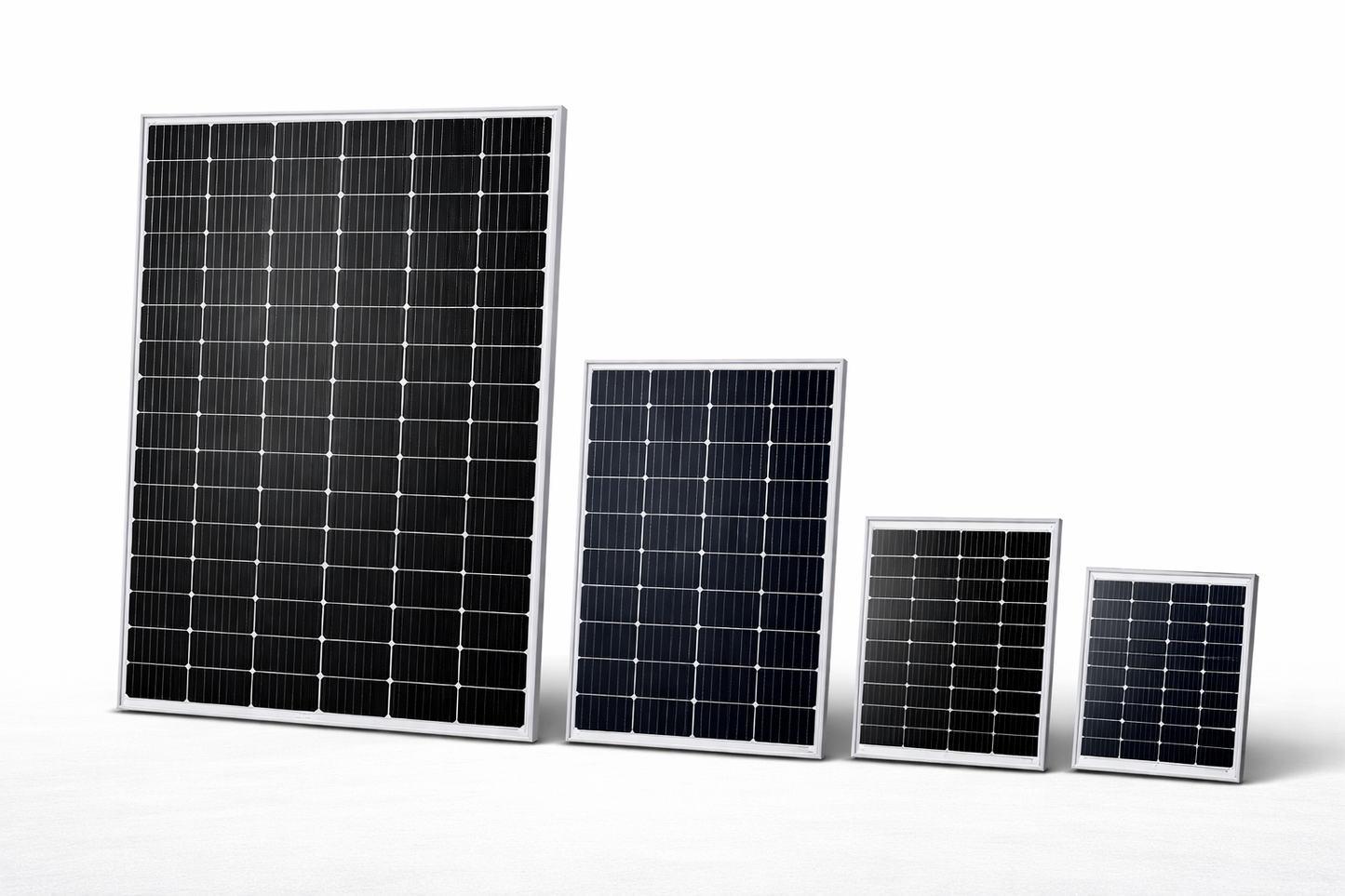
MoEnergy’s scalable product platforms provide repeatable solar architectures that can be adapted across power levels, mounting requirements, and integration environments. These platforms reduce development risk while enabling customization for commercial deployments.
Platform Architectures
MoEnergy currently supports three primary scalable solar panel platforms. Each platform serves a distinct integration and deployment profile.
Glass Solar Panel Platform (Baseline)
The glass solar panel platform represents the conventional rigid solar architecture and serves as the baseline reference for performance, durability, and cost across programs.
- Tempered glass front with aluminum frame
- Standard rail or bracket mounting
- Balanced cost and durability
- Widely accepted for OEM and fleet programs
Learn more: Glass Solar Panel Platform
Aluminum‑Backed Solar Panel Platform
The aluminum-backed platform is designed for structural integration and direct mounting without external frames, making it ideal for vehicle and industrial installations.
- Rigid aluminum backsheet for direct mechanical mounting
- Improved heat dissipation
- Low-profile rigid construction
- Optimized for vehicle, fleet, and enclosure integration
Learn more: Aluminum‑Backed Solar Panel Platform
Flexible Solar Panel Platform
The flexible solar panel platform supports lightweight and curved-surface installations where rigid panels are impractical.
- Ultra-thin, lightweight construction
- Conforms to curved or uneven surfaces
- Adhesive or hybrid mounting options
- Suitable for mobile and weight-sensitive deployments
Learn more: Flexible Solar Panel Platform
Platform Comparison (Reference)
- Glass: baseline / standard, rail-mounted, medium weight
- Aluminum-backed: structural / direct-mount, low-profile rigid
- Flexible: lightweight / curved-surface, ultra-thin
Relationship to Configurable Commercial Kits
Configurable Commercial Kits are built using the scalable platforms above. Kits represent deployment configurations rather than standalone product platforms.